
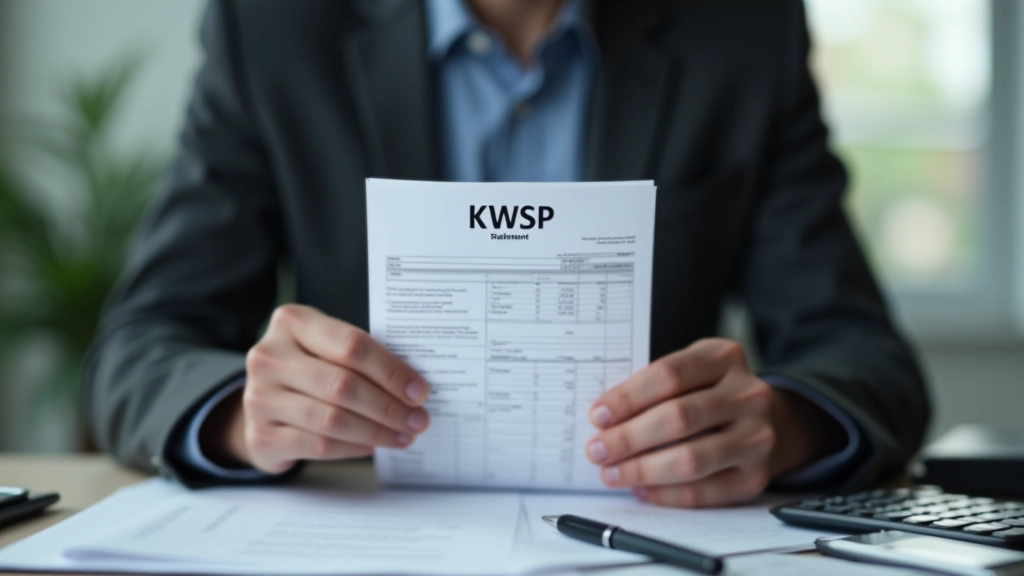
Understanding EPF and KWSP Contributions
How much goes into your EPF, where it comes from, and what it means for your retirement planning.
Read moreA practical approach to recording what comes in and what goes out. We break down the simplest methods that actually stick.

Here’s the thing: most people have no idea where their money actually goes. You earn your salary, bills come out, groceries happen, and suddenly the month’s over. Then you wonder where everything went.
Income-expense tracking isn’t complicated. It’s just writing down what comes in and what goes out. That’s it. When you see it written down, something clicks. You’re not guessing anymore — you’re actually seeing the picture.
In Malaysia, where we’re managing salaries, EPF contributions, and household expenses in ringgit, tracking becomes even more useful. You’ll understand how much really stays in your account each month, and where you could make adjustments if needed.

Different approaches for different people. Pick one and start.
Write everything in a notebook. Simple, offline, and you remember it better. Use columns: Date, Description, Income, Expense. Review at month’s end.
Google Sheets or Excel gives you formulas. Totals calculate automatically. You can make charts to see where money flows. Takes 15 minutes to set up properly.
Apps sync with your bank. Expenses log automatically. You see categories and trends. Less work, but requires some setup time to connect accounts.

Don’t overthink this. You don’t need perfect categories from day one. Just start with broad groups: Salary, Rent/Mortgage, Groceries, Transport, Utilities, Dining Out, Entertainment, Miscellaneous.
Write down your salary on day one. Then for the next 30 days, every time money leaves your account — for anything — write it down. Receipt? Snap a photo. Paid online? Note the date and amount. Card swipe at the supermarket? Write it.
Don’t judge yourself. Don’t feel bad about the coffee or the delivery order. You’re just collecting information right now. At the end of the month, you’ll add everything up and actually see what happened.
Use these categories. You’ll notice patterns in weeks, not months.

After tracking for 30 days, patterns emerge. You’ll see that you’re actually spending RM180 monthly on coffee and snacks — an amount you didn’t realize. You’ll notice transport costs more than you thought. Or maybe groceries are reasonable but dining out is the real leak.
This is valuable information. Not to make you feel guilty. Just to know. When you know where money actually goes, you can decide what to adjust.
Some people find they’ve got room to increase EPF savings. Others realize they could reduce dining out by half and free up RM200-300 monthly. Some discover they’re spending less than they thought. The point? You get facts instead of guesses.
“I didn’t think I spent much. Then I tracked three months and saw I was spending RM2,400 on food delivery alone. That number was shocking. Now I cook more.”
— Arun, 34

When you track expenses, EPF contributions matter.
Your employer deducts EPF from your salary automatically. As of 2026, employees contribute 11% of basic salary (or up to RM6,500 monthly) to Account 1, and 3% to Account 2. This comes out before you see your paycheck.
When you’re tracking income and expenses, include EPF in your expense list. Why? Because it’s money that affects your available cash. If you earn RM4,000, roughly RM440 goes to EPF, leaving RM3,560 as take-home. That RM3,560 is what you actually have to work with.
Understanding this helps you see your real monthly budget. You’re not confused about “where did RM440 go?” — you know it’s in your retirement savings, working for your future.
Quick tip: Track your take-home salary, not gross. That’s the number you actually work with. EPF is separate — it’s building your retirement, not an expense you control monthly.
Sunday evening works for most people. Spend 10 minutes writing down the week’s expenses. It becomes routine, not a chore.
When you buy something, snap a photo of the receipt immediately. Then log it when you do your weekly review. You won’t forget amounts.
Add everything up on the last day of the month. See total income versus total expenses. That number tells you if you’re ahead or behind.
After three months, you’ll see patterns. March looked different from February? Figure out why. That’s where insights come from.
You’ll miss some expenses. That’s okay. You’re getting 85% of the picture, and that’s enough to make good decisions. Done beats perfect.
Write down everything, even the impulse buys. You’re not reporting to anyone. This data is just for you, so it needs to be real.

Track everything for one month. Paper, spreadsheet, or app — the method matters less than starting.
Use broad categories first. Refine them later after you see where money actually flows.
Include EPF contributions in your awareness. Understand your take-home versus gross salary.
Don’t judge yourself. You’re collecting information, not trying to be perfect.
Keep going for three months. Real patterns emerge by month three, not month one.
This article provides educational information about income-expense tracking methods for personal financial management in Malaysia. The content is informational and not financial advice. Individual circumstances vary, and what works for one household may not work for another. We encourage you to consult with a qualified financial advisor if you need personalized guidance on budgeting, EPF contributions, or financial planning decisions. Currency references are in Malaysian ringgit (RM). EPF/KWSP rates and contribution limits mentioned are based on 2026 guidelines and may change — verify current rates with your employer or KWSP directly.

